Blog

  • SEO Jobs in USA: 7 Best Roles, Salaries and Career Tips

    SEO Jobs in USA: 7 Best Roles, Salaries and Career Tips

    SEO Jobs in USA, there are many different types of SEO jobs. These jobs may involve content optimization, technical SEO, local search marketing, analytics, and/or digital marketing management. If you are new to the field, you could potentially obtain an internship position or even a junior specialist position. If you have been working in this area for some time, then you may want to look into pursuing a management role or possibly becoming an independent consultant. You will also be able to find both

    remote, hybrid and on-site job options with both marketing agency firms as well as in house teams.

    When attempting to increase your odds of being hired, you should practice developing your practical optimization skills, understand how to analyze search performance data, and create a portfolio that demonstrates your ability to

    identify and resolve issues related to websites.

    Where to Find SEO Jobs in USA

    Begin by searching for available SEO positions on Indeed, LinkedIn, and the careers section of various company websites. Examples of places to search include digital marketing agencies, software development firms, e-commerce stores, publishers, and local companies.

    Search for several different types of jobs, rather than searching for just one. Employers may post openings for “organic growth specialist” or

    “digital marketing analyst” which are actually positions with a lot of SEO work.

    Narrow down your search results by using location, job experience, employment type, and salary filters. Please make sure to check the actual employer’s web site prior to submitting an application, as many third party postings

    will continue to display on the internet long after the positions have been filled.

    7 SEO Career Roles Worth Exploring

    SEO Specialist

    An SEO expert conducts keyword research for search terms used by users to find products/services on the web. In addition, an SEO expert will review and revise the content of the client’s website to ensure that it has all of the relevant information required for the user to make a decision about purchasing from the company.

    The SEO expert will also identify areas where the website can be improved to increase its visibility in search results. Lastly, the SEO expert will monitor the organic traffic generated from search engines to determine if the strategies implemented are working effectively. This job is most suitable for people who like to use their research, writing, and analytical skills to help companies reach more customers online. The specific responsibilities of an SEO expert will depend greatly upon the company he/she works for.

    SEO Analyst

    In order to help marketing teams understand how well their searches perform, why traffic has changed, and what they should do next, analysts review search data and make recommendations. One of the reasons that spreadsheet skills are so valuable is because analysts spend much of their time evaluating landing pages, finding patterns in the data, and reporting those results to the marketing team.

    Technical SEO Specialist

    Technical experts review a site’s accessibility to search engine spiders. Some of these technical experts’ duties will involve reviewing and identifying why a site isn’t indexed, reviewing redirects on a site, verifying the accuracy of a site’s structured data and collaborating with developers to enhance a site’s overall structure. It’s also helpful if they have experience with HTML and site crawlers.

    SEO Content Writer

    Content writers create articles, service pages, and other types of website content that is tailored to what readers want to know and how they will search for it. In addition to knowing where to place keywords, candidates who have excellent writing skills, strong research habits, and are knowledgeable about creating links within their own websites can differentiate themselves from others.

    Local SEO Specialist

    Local search specialists can assist with attracting customers to your business from a particular geographical area. The types of activities they could perform include managing your Google Business Profile, ensuring the accuracy of your business listings, creating location pages for each of your locations, and providing you with local search reports. Agencies that serve clients in the restaurant industry, dental industry, and home services industry will typically require the services of a local search specialist.

    SEO Manager

    Managers manage optimization projects, prioritize activities, assign resources and report back on the outcomes to the individuals who have a stake in those projects. In general, employers are looking for someone with some level of experience in optimizing processes or projects, as well as a strong sense of how to use data to make strategic decisions. Additionally, employers would like someone who can effectively collaborate with content creators, developers and other marketing professionals.

    SEO Consultant

    As an SEO consultant, you would evaluate websites, recommend ways to improve them, and assist your clients with creating and executing successful search strategies. You could either provide these services as a sole proprietor or as part of a larger agency. To be successful in this role, you will need to have both the technical expertise to understand how search engines operate, as well as the ability to communicate with clients about what the impact on their business will be.

    • Read more: SEO Jobs in USA

    How Much Do SEO Professionals Earn?

    Salaries vary based upon the level of experience an individual has, the region where they work, the company that employs them, their area of expertise (or specialization), and the extent of their job duties. For example, a junior content optimizer role should not be evaluated against a senior manager who is in charge of several websites.

    According to the U.S. Bureau of Labor Statistics, market research analysts and marketing specialists received an average of $78,760 in yearly wages in May 2025. Although this broader occupational group gives some indication as to what you may earn, it is not specific to SEO.

    When reviewing the offers you have received, look at your starting wage, how much money you can make based on your performance, the cost of your health insurance, the type of retirement plan offered, and how much time off you will be allowed. Contractors who work independently should also include the cost of their unpaid time, business-related expenses, and the benefits they provide to themselves.

    Essential Skills Employers Look For

    You don’t need to know all of the different types of marketing before you apply. Learn the skills for the job that you want.

    SkillPractical application
    Keyword researchIdentify relevant customer searches
    On-page optimizationImprove titles, content, and internal links
    Technical SEODiagnose crawling and indexing problems
    Search analyticsInterpret impressions, clicks, and trends
    Content strategyPlan useful pages around audience needs
    CommunicationExplain findings and recommend actions

    Google’s SEO Starter Guide provides an excellent basis for understanding the concepts of optimizing websites and avoiding using older, less effective methods of optimizing websites.

    Practice using Google Search Console, Google Analytics, and spreadsheet programs. Knowledge of software programs like Screaming Frog, Ahrefs, or Semrush is beneficial for those who may work at a company that utilizes these tools on a regular basis.

    How to Get an Entry-Level SEO Job

    Build a Practical Portfolio

    Create a mini-site or work on a project with which you are authorized to proceed. Research the appropriate topics, post helpful content, analyze your search engine indexing and track performance of your site/project over a period of time.

    You’ll want to use your portfolio to tell about the problem, the modifications you’ve made, and how those modifications affected things. If traffic isn’t growing yet, you’ll need to share what you found out, and what you’re going to look into next. Honesty in your documentation will be more beneficial than making up results.

    Prepare Your Resume and Interview

    Tailor your resume based on the duties of the position as listed in the job description. Include tools used, projects worked on, and quantifiable successes with documentation supporting those claims.

    Prepare to explain what steps you would take to find out why your website’s organic traffic has dropped significantly. A reasonable way to respond is by saying that you would first check if the site is still being indexed; then determine which pages are affected; assess whether there is a change in the amount of searches for keywords relevant to those pages; review recent updates made to the website; and rule out any measuring mistakes prior to recommending solutions.

    Remote Work, Agencies, and In-House Positions

    Remote SEO jobs provide employees with the opportunity to work remotely; however, a remote label on a job posting doesn’t always indicate that an employee can perform their duties remotely while living in another country or state. Remote SEO employers will likely place limits on where employees can live and what times they must be available for work. In addition, these remote SEO employers may also require proof of work authorization.

    Agency roles can offer exposure to several different industries as well as various types of websites. Additionally, agency roles will often require you to attend frequent meetings with clients while working on tight schedules with multiple deadlines.

    In-house positions usually let you focus on either a single company or a series of similar companies. You might be more involved in developing products and making long-term marketing decisions.

    Ask for information regarding: who implements the technical suggestions, how success is determined, and what tools/resources will be available to you before making a final decision on an offer. The above three pieces of information can give you a better idea of what your work environment may look like than the job description itself.

    When searching for SEO positions, take note of how the company measures its success. For example, if the company is looking for someone to help grow their online retail business, then the company will most likely want to know how well products perform on the website and how much money the company makes. On the other hand, if the company is looking for someone to help increase the number of people who read their articles and engage with them, then the company will probably focus on how many people find their articles through search engines and how many of those people leave comments or share the article with others. By asking about the employer’s expectations for the job during an interview, you can gain a better idea of what your day-to-day responsibilities will be.

    Conclusion

    Successful search marketing careers begin by selecting a role based on what you do well, and then creating a record of your achievements. To begin, find positions that interest you, learn the tools described in those jobs, and create a portfolio of projects that are similar to real-world website issues. Once you have gained some experience, you may wish to pursue more specialized technical work, management, or freelance consulting. Your primary focus should be finding employers who value long-term optimization and provide measurable results for business goals.

    Frequently Asked Questions

    Can I get an SEO job without experience?

    Indeed. An internship, assistantship, or junior marketing role may serve as your “foot in the door.” Additionally, if you’ve done a personal website, volunteered on a project, or documented a practice audit that demonstrates you understand what is required for an entry-level position in SEO, those can be used to show that you are ready to begin working.

    Do I need a degree to work in SEO?

    The requirement for employment can differ among employers. Many employers seek candidates with degrees in marketing, communications, or other areas of study that are related to those fields; however, some employers may accept candidates who possess practical experience and relevant knowledge as well. You should be aware of what each employer considers to be a minimum qualification prior to applying for a position, instead of assuming that a degree is always required.

    Does SEO require coding skills?

    Having some basic understanding of HTML is beneficial for many types of jobs in the tech industry. For jobs that focus on creating or optimizing content and for those that are located locally (within your community), you don’t always need to have a background in computer science. For advanced technical roles, it can be very helpful to understand how JavaScript works, what a server does when someone visits a site, and how a website displays its content.

    Are SEO certifications worth getting?

    The use of training certificates is a good way to show your knowledge of, and interest in, specific tools. Certificates are best used in conjunction with a project demonstrating the practical application of the knowledge gained from the course. Training certificates alone do not guarantee jobs.

    How can I avoid fake SEO job offers?

    Confirm that the employer has an active website, check out who is recruiting for the position, read through the job posting to understand what will be expected of you, and do not pay for your application fee prior to having your employment contract signed. If someone asks for sensitive financial details before you are certain that the hiring process is legitimate, proceed with caution.


  • Joe SEO: 5 Essential Services and Smart Hiring Tips

    Joe SEO: 5 Essential Services and Smart Hiring Tips

    Joe SEO is a digital marketing agency that provides a range of services including search engine optimization, website design, local search marketing, and online advertising. The company states on its official website that it has been providing integrated digital marketing solutions since 2023. These services are most likely to be beneficial for small businesses who wish to find targeted customers, establish a stronger online presence, and increase the number of inquiries they receive from potential clients; all while not having to manage all of the different aspects of digital marketing themselves.

    However, before you hire an agency, knowing what types of services they provide, how they price their services, and how they report on results will allow you to make a more educated decision when investing your money.

    What Is Joe SEO?

    The company provides digital marketing solutions that enable companies to reach prospective customers via search engines and other web-based channels. Their website features tailored marketing programs developed in response to each company’s specific objectives.

    Unlike other marketing agencies that only focus on getting your business ranked in search engines, this agency offers additional services such as building websites and advertising through paid ads. By combining all of these services, you will be able to have a more unified marketing strategy.

    The official company profile for the agency outlines the way it communicates with customers, plans campaigns, and increases organic search. The agency has made commitments based on what is stated in the company profile rather than having those commitments verified by third parties.

    5 Main Digital Marketing Services

    Search Engine Optimization

    SEO provides a means by which search engines can understand what is contained within a site and provides potential customers with the opportunity to find the product/service that they are looking for.

    The Agency promotes its Search Optimization and Service Specific Landing Pages. For example, a Dental Practice could use separate landing pages for dental implants, emergency appointments, and tooth cleaning as opposed to having all of these services listed together on a single general services page.

    Effective optimization connects each page with a clear customer need.

    Technical Website Optimization

    Technical search engine optimization (SEO) addresses issues with a website’s ability to rank well on organic search engine results.

    A typical technical optimization project may examine:

    • Broken internal links and redirect errors.
    • Website loading performance.
    • Mobile usability and navigation.
    • XML sitemaps and indexing problems.
    • Duplicate pages and canonical tags.

    The industry commonly provides these types of results. Before entering into a contract, businesses will need to determine whether or not each task is part of the agency’s proposed service offering.

    Website Design and Development

    A well designed website will be of little use to your business if your customers are unable to locate the products/services that you provide. Poor site organization/navigation, slow loading times, and complex contact forms may discourage your customers from completing an action on your site.

    The design of a website should satisfy the requirements of being user-friendly as well as meet business goals such as sales/marketing. For example, a service company should have easily identifiable contact information, detailed product descriptions, and simple ways to schedule appointments.

    The company’s website design service combines web development and marketing to generate leads.

    Local SEO and Business Listings

    Local search optimization is most useful for businesses such as restaurants, doctors’ offices, home repair services, etc., that serve particular areas.

    The elements of a local SEO strategy could include:

    • Updating a Google Business Profile
    • Verifying that the business data is accurate
    • Creating content tailored for each location
    • Controlling how your business is listed on various directories

    Generally, for a California plumbing company, it is much better to attract customers within its actual service area than to generate thousands of irrelevant visits from all over the United States.

    Social Media Advertising

    Paid social ads give businesses the ability to show their products and services to specific groups of people, instead of only being found through organic search.

    Campaigns can advertise a number of different things such as seasonal promotions, appointment booking options, new product releases, or specific service offerings. However, campaign success will ultimately depend upon several variables including selecting the right target audience, the amount of money spent on advertising, how visually appealing and informative the advertisements are, and whether or not the business tracks when people convert.

    When reviewing a proposal, you need to make sure you have the ability to differentiate between the cost of advertising and the agency’s management fee.

    How an SEO Campaign Should Work

    Rather than immediately publishing articles or purchasing marketing tools, a successful campaign starts with an understanding of the business.

    The agency will first identify all the issues that are currently affecting the performance of the client’s website. They will then look at other agencies who provide similar services as well as the types of clients they serve. Finally, the agency will determine which keywords are most relevant to the needs of the client’s customers.

    In the following phase, you should prioritize enhancements. For example, if your site has indexing problems, then you will first have to make sure those technical issues are resolved before you begin to develop your site’s content. On the other hand, if you already have a well-developed site but lacks sufficient information on what services you provide, you would probably do better by creating helpful landing pages.

    Performance monitoring must begin once the changes have been implemented, as compared to a pre-determined baseline.

    The Google SEO Starter Guide is a resource that allows businesses to gain an understanding of basic optimization techniques and determine if proposed recommendations are reasonable.

    How Much Does Hiring an SEO Agency Cost?

    During my research, I could not find a verified public pricing schedule for this provider. Therefore, businesses should contact them directly to obtain a written quotation rather than rely on what appears to be estimated package pricing found elsewhere.

    The cost of an SEO campaign will vary based upon the size of your website, how competitive your industry is, what type of technical work needs to be completed, how much content you need to produce, and how much time and energy you are willing to invest into maintaining your SEO efforts.

    Pricing modelSuitable for
    One-time auditIdentifying existing website problems
    Monthly retainerContinuous optimization and monitoring
    Project-based pricingWebsite redesigns or migrations
    Hourly consultingIndividual technical or strategic tasks

    Is it included in the quotation that we will be paying for implementation, reporting, content updates, and other software costs?

    The cost of an audit is relatively low compared to what it may take to fix issues that are identified in the audit. Comparing the total cost of a project will provide a more realistic view of how much a company would have to spend on that project as opposed to just looking at the initial advertising price for the service.

    How to Measure SEO Performance

    Evaluating campaign success based on how many keywords appear in your rankings reports is not as effective as evaluating campaign success based on business goals.

    A local electrician gets more visitors on his site because of an SEO campaign, but if they are located outside of his service area, then the increase in traffic does not translate into more money for him.

    More meaningful metrics would include the number of qualified inquiries received, the amount of appointments requested, organic search traffic that is relevant to your business, the conversion rate of those who visit your site, and how visible you are for searches which may have a commercial value.

    Google Search Console allows users to track search impressions and clicks. Additionally, analytics and customer management systems offer supplementary data on user activity and completed inquiries.

    Ask for consistent reporting that shows organic performance separately from paid advertising performance.

    Who Should Consider This Agency?

    Businesses who wish to coordinate multiple marketing activities with one provider will find the company’s advertised services of website development, search marketing and advertising to be beneficial.

    Potential customers can be small businesses with a substantial first-time web presence, local retailers, professional service firms, and home improvement companies.

    Organizations that have global reach via their website, are involved in extensive online sales and/or require specialized technical assistance may want to find out if the agency being considered has worked on similar types of projects.

    An agency’s capability, resource availability, and knowledge of the industry will determine if they are a good match for you. A wide range of services offered by an agency does not mean that the agency is experienced in all areas.

    What to Check Before Hiring an SEO Provider

    Ask each potential service provider for an explanation of the services they plan to deliver, what you can expect as a result of those services, how often you will receive reports from them regarding the status of the project, and the specific terms of their proposed agreement.

    Ask for examples of relevant case studies and specify what metric was used to measure their success. Determine who is responsible for managing your website, analytics accounts, business listings, and published content.

    An evaluation process for potential SEO professionals can be started with Google’s recommendations regarding the hiring of an SEO professional, which will also help you to avoid being misled by unreasonable expectations.

    No legitimate search engine optimization (SEO) firm can promise that you will achieve a specific organic search engine ranking. There are many variables that determine how visible your website is in search results, including competition, and the relevance and quality of the content currently published online.

    The best choice for you is to find a provider who will take time to explain their recommendations, and how those recommendations relate to the measurable goals of your business.

    Conclusion

    Joe SEO is a business that provides both search engine optimization (SEO), web site design/development, and online advertising. This allows companies who want to use these three types of digital marketing together to receive assistance from one company.

    Before making a commitment, ask for a written estimate of costs and what will be included in the service. Review examples of past projects from agencies you are considering. Set specific goals for performance of the agency. You want an agency that knows who your customers are, communicates with you openly, and offers services to help improve your website and marketing efforts.

    Frequently Asked Questions

    Where is the company based?

    The organization promotes its digital marketing and web site development services within the city of Merced, CA. Those who reside out-of-town can reach out to the organization to determine if they are able to provide service, how communications will occur, and if the organization offers remote campaign management.

    Does the agency work with small businesses?

    The service that the company provides is geared toward small business owners, specifically those that want to have a website built and find new local customers. Owners need to determine what type of marketing budget they have as well as their business goals prior to selecting one of the packages.

    How long does SEO take to show results?

    Results vary based upon competition, current site state, the speed of implementing changes, and how well your site currently ranks with search engines. Establishing realistic goals and measuring success over time will provide better results than simply expecting to rank on the first page immediately.

    Is SEO better than paid advertising?

    There isn’t one channel that’s always better than the other. Organic search helps people find your business naturally through search engines. Paid ads are useful for getting noticed when you’re actively running an ad campaign. Many times, businesses will use both organic search and paid ads to meet their budgets, customers’ needs and overall marketing goals.

    Can I manage SEO without hiring an agency?

    Yes. A website owner has the ability to learn some fundamentals of search engine optimization, enhance current content on their site, and track how well they are doing in terms of search engine results by themselves. Professional help with search engine optimization is more likely to be needed when the website owner encounters technical issues with their website, competes in a very crowded marketplace, has little time available to work on their website, or has a complex website structure which requires specific expertise.

  • SEO Agency: How to Choose the Right Partner for Your Business

    SEO Agency: How to Choose the Right Partner for Your Business

    An SEO (Search Engine Optimization) firm is designed to help businesses rank well in organic search results using various methods including; fixing technical issues with the site, providing quality content, and creating a more logical structure for the site. When selecting an agency, it is important to find one that understands your target audience, has clear explanations for their methods, and will provide reports showing results that are meaningful to you such as qualified leads or sales.

    Before selecting a company that promises to generate traffic for your business in the United States, determine what your specific requirements are. Below you will find a list of services provided by agencies, cost of those services, local knowledge/expertise of the seo agency, and seven things to check before signing with an agency.

    What Does an SEO Agency Do?

    A search engine optimization firm evaluates how visitors locate your site and provides recommendations for making relevant content more accessible and user friendly. Although its scope of practice may span multiple areas, what it delivers is determined by the terms of your contract.

    Technical SEO and Website Audits

    Technical experts evaluate access to the crawler, indexing of the website, link structure within the site, mobile friendliness of the website, identification of duplicate URLs, as well as additional issues that may prevent successful search engine optimization (SEO) of your website. An effective audit identifies both urgent and less urgent improvement opportunities for your website and provides a plan for testing those improvements once they are implemented. It is important to note that not all automated warnings provided by an SEO tool indicate an urgent issue.

    Keyword Research and Content Planning

    Keyword research links what users ask for on search engines to related content on your site. For example, a home repair company may require service pages tailored to the location(s) they serve, and an online store will most likely require product categories and comparisons. Planning ahead ensures that you can make updates to existing content as required.

    Local SEO and Business Visibility

    A local SEO company can assist some qualified companies in improving their Google Business Profile, maintaining accurate company details, and developing effective location pages. The visibility of a company locally is based on several factors including relevance, proximity, and notoriety. Simply including city names throughout a website will not substitute for incorrect data or a poor quality service.

    Reporting and Continuous Improvement

    SEO Agency should explain the changes made, the reasons behind those changes, and what will be reviewed next. To do so, providers should monitor search visibility in addition to the business benefits generated from search. Google Search Console will provide data on search impressions and clicks. Data collected through analytics and customer records will identify leads, bookings, or purchases.

    Seven Checks Before Hiring an SEO Company

    Selecting a provider is more than merely reviewing a great sales pitch, it is about determining which company will complete the job and what constitutes successful completion of that job.

    Define Your Business Goals

    You have to make a choice about what is most important to you: making local phone calls, earning money from e-commerce sales, generating qualified leads, or improving the search visibility of informational resources. Once you share with us which of your products/services are the most valuable to you and where you would like to reach new customers, an seo agency will be able to provide you with recommendations on how to achieve your goals rather than trying to rank for keywords that do not help you meet those objectives.

    Verify Experience With Similar Projects

    Request to see case studies that illustrate the initial challenge faced, what actions were taken to address it, and the results achieved. Inquire if the case study subjects are of comparable size or within the same sector as your business. Case studies may be supported by customer testimonials; however, those testimonials are not a substitute for discussing the actual work completed.

    Ask for a Useful Initial Assessment

    A potential business partner should present the company with several valid opportunities as well as discuss any potential limitations. Google suggests that you evaluate your prospective employees/employees carefully when hiring an SEO, and cautions against providing “rank” guarantees. When possible, provide read-only access to your systems/data as opposed to full administrative rights.

    Examine Its Methods and Link Practices

    Find out what the business does to generate content, fix problems with technology, and obtain links. Do not purchase bulk link packages, use hidden redirects, or build web pages that exist solely to improve search engine rankings. Evaluate all proposals against Google Search Essentials, which identifies the technical requirements and spam policies for search engines.

    Compare Written Deliverables

    A good proposal will state what pages need to be improved, how often you will report back to your client, who is responsible for each part of the project, what additional costs there may be, and when you plan to conduct audits. You also want to check to see if your proposal covers implementation, development time, and content production. Although two proposals may cost the same amount of money, they may contain drastically different levels of work.

    Confirm Communication and Account Ownership

    Find out who will manage your day-to-day interactions with us, and ask about the approval process for making changes to your accounts. You should retain control over your domain name, website, analytics tools, and all other business-related accounts. Be sure to find out what kind of access you will have to reports and content if we are no longer working together, and carefully read the cancellation policy prior to committing financially.

    Focus on Evidence, Not Promises

    In no way can any organization ensure that you will appear at a specific location on Google. An effective team is able to explain the uncertainty involved in your campaign, provide measurable goals for progress, and adapt their strategy according to the knowledge they gain throughout the course of your campaign. If a company tells you that they have inside information about how Google ranks web pages, or guarantees that you will be ranked in the top spot on Google permanently, consider these red flags.

    SEO Services Near Me: Is a Local Company Better?

    Searching for “SEO services near me,” “SEO company near me,” etc., can be helpful if you would prefer face-to-face meetings, or if you are looking for an SEO professional who understands your region’s customers. Your local SEO professional should be able to identify local trends, terminology used by your target market, and competition in your area. Distance from your office is not a metric that measures technical knowledge.

    Compare local and remote candidates based upon the same criteria: work history, proposal transparency, realistic reporting and quality of communication. A professional based in another location could potentially have a greater understanding of your industry or e-commerce platform. If you find yourself placing a high value on local search engine optimization visibility for your company, then ask each candidate to outline their strategies for managing real-world service area locations, multiple locations and business profiles.

    Agency vs. SEO Consultant: Which Fits?

    An independent SEO consultant is appropriate for a narrow scope of auditing, migrating review or strategic planning that is then implemented by your own internal staff. An seo agency typically provides multiple experts to manage content creation, technical issues, and reporting. Both types of arrangements can work successfully if each party’s role is clearly defined.

    The choice should be made based on how much work is involved, not on the job title. A larger team might make sense if you need to consistently write content for your website, coordinate with developers, and maintain your local listings. However, if you have on-staff marketers and developers, then a knowledgeable consultant can give you the guidance needed to accomplish what you want without a heavy financial commitment.

    How Much Do SEO Services Cost?

    The cost of SEO will vary based upon the size of your site, how much competition you face, where you want to rank, what level of skill is needed to perform the work, and what type of results you expect. Some providers will offer monthly retainer services; others will provide fixed price projects; and still others will charge by the hour for their consulting services. It’s difficult to compare different “packages” of services offered on various websites since one package may include actual work to implement improvements, while another may simply make recommendations.

    Prior to agreeing upon a rate, find out what tasks will be completed on a monthly basis, by whom, and what occurs when your priorities alter. Budget for development/content creation if these services are billed individually. Do not select the most inexpensive option until you have reviewed the scope of services provided and be cautious of pricey packages with little details.

    How to Measure SEO Results Without Guesswork

    The first step is establishing a baseline for your web site. To do this you will want to identify what pages are most important to you, the number of times people view these pages (organic impressions), the number of times people click on them (organic clicks), how many inquiries you receive via the web site, how many purchases are made through the web site and any other types of interaction with your web site that is important to your business. For example, a local service business will likely be more interested in tracking how many appointments have been scheduled through the web site than how many people visited a general article. Conversely, an online store will probably want to track how much money was generated by users who found their store using a search engine.

    Google’s SEO Starter Guide states that providing useful content and making sure that the website is easy for users to navigate are both essential. Improvements will likely occur over a period of time, and search engine performance may vary. Trends should be reviewed for reasonable amounts of time rather than evaluating a whole campaign based on rankings for just one week. Also, you should request that your service provider provide a distinction between tasks they have completed and results they can demonstrate.

    Frequently Asked Questions

    How do I find the best provider for my business?

    Compare the assessments, written scopes and reporting plans of each provider with relevant experience. Determine which of these providers has the best understanding of your customer base and not just which one was awarded the most or had the lowest prices.

    Should I hire a local SEO agency?

    When you have a business with multiple brick-and-mortar stores, or your business relies heavily on the local community for revenue, a local expert can be very beneficial. Remote experts can also handle your local SEO needs as long as they know about your target audience and can effectively communicate with you.

    What is the difference between SEO and paid advertising?

    SEO works to improve a business’s visibility within unpaid search results. Advertising on the other hand is paid for by the business and follows the rules of each advertising platform. Many businesses will employ both SEO and advertising; however, it is important to separate their respective budget allocations and performance measurement criteria.

    How long does SEO take to work?

    There are no set times for how long things will last. You can apply some quick fixes to technical issues; however, if you are looking to improve your rankings in search engines, it may take a little longer. How much time it takes will depend on who you are competing against, what state your site is currently in and the level of quality you put into your improvements.

    Can an SEO company guarantee first-page rankings?

    No. Google has total control over its search results, so rankings will depend on what people are looking for and how they look for it. A good provider will be able to describe how they do things, provide a reasonable estimate of future performance, track how well you’re doing, but won’t promise that you’ll rank in a specific spot.

    Final Thoughts

    Choosing the correct SEO company means having an organization that has a firm understanding of your company’s goals and needs; that can identify effective improvements; and that provides clear reporting about their efforts. Before making a commitment, compare the companies’ actual knowledge and experience, how transparently they operate, what types of contracts they offer, and most importantly, how those efforts will affect your business. Begin by assessing each company based on your specific needs, and then pick the one whose suggested strategies are appropriate for your target audience and available resources.

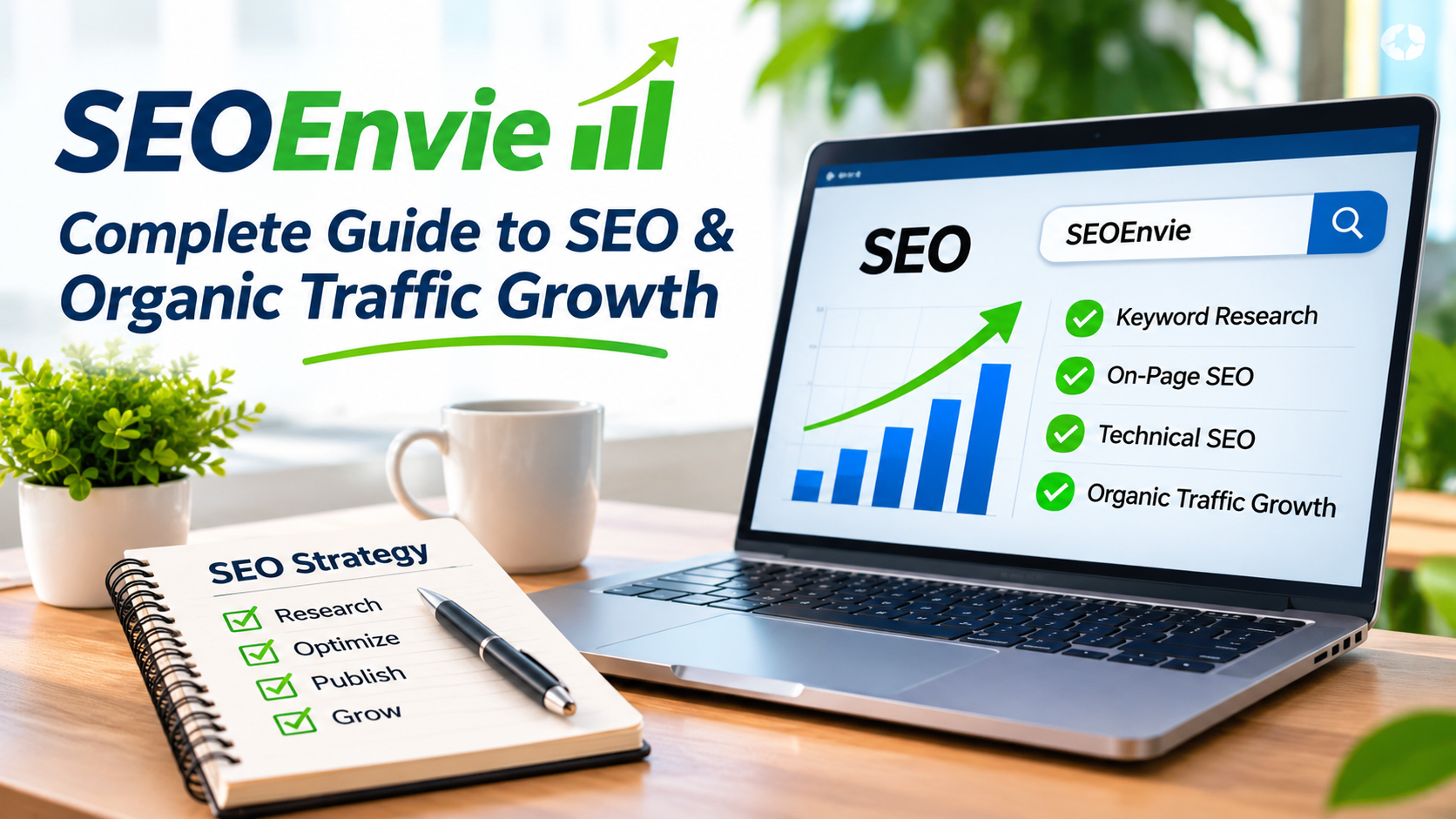
  • SEOEnvie: A comprehensive guide to SEO and growing your business through organic traffic

    SEOEnvie: A comprehensive guide to SEO and growing your business through organic traffic

    SEOEnvie is a term that relates to search engine optimization (SEO), but there isn’t a well-defined technical SEO concept called SEOEnvie, nor is there a clear, verified, independent platform with this name. To help those who are interested in finding out more about SEOEnvie, including website owners, bloggers and digital marketers; it is important to understand the basic principles of SEO. These would include doing keyword research, optimizing each page of a site (on page SEO), making improvements to a site’s technical aspects, optimizing content for search engines, and developing methods to increase the amount of natural (organic) traffic to a site.

    The purpose of search engine optimization (SEO) is to make your website more accessible, applicable and useful for users who are using Google and other search engines to find information. Whether you have a company website, an e-commerce site or a personal blog; having knowledge of how SEO works will allow you to build a stronger online presence.

    What Is SEOEnvie?

    SEOEnvie is not considered an accepted term in the SEO industry. Therefore, it is important to understand that SEO is not synonymous with SEOEnvie. SEO represents Search Engine Optimization.

    SEO (search engine optimization) is about enhancing a website’s content, structure, technical capabilities and overall reputation to improve how visible it will be in the organic or non-paid search results.

    The goal of effective optimization is to drive more relevant traffic to your site. This includes bringing in people that have a legitimate interest in the content, products or services that you offer on your site.

    According to the SEO Starter Guide published by Google, optimizing your site will help search engines comprehend what your site is about, as well as aid users in finding the most applicable pages on your site.

    How Does Search Engine Optimization Work?

    Search engines use software programs to find, categorize and display web content. When you understand how search engines work, you can create a better search engine optimization (SEO) plan.

    Three important stages explain how search engines handle websites.

    Crawling

    The use of automated software (or “crawlers”) by search engines allows them to locate web pages. The crawler follows each link and determines if there is content on a page which could potentially appear as part of a user’s search result.

    When a website has good organization and its internal links are easy to access, finding content on that website will be much simpler.

    Indexing

    Once a search engine has located a Web site, the search engine will review the site’s contents and add that data to its index.

    Duplicate pages, technical issues with the website, and/or poor quality of the content may prevent a page from being included in the index. Therefore, while crawling is necessary, it is not sufficient to ensure that a page will be indexed.

    Ranking

    When a user performs a search using a search engine, the engine will review all indexed pages that are relevant to the user’s search criteria. Based on this review, the engine can then select the page(s) that most closely match the user’s needs.

    Ranking relies upon a variety of different systems and signals, such as the relevance of your content, how useful it is, and other page-related factors.

    While SEO enhancements may increase your site’s visibility, you can’t be guaranteed a certain rank.

    Important Components of an Effective SEO Strategy

    The best SEO strategies combine multiple optimization methods rather than focusing on singular keywords.

    Keyword Research and Search Intent

    Keyword Research is used to identify the terms that individuals are entering into their search engines.

    For example, if someone searches for “best running shoes,” they are looking for recommendations. However, if that same person searches for “how to clean running shoes,” they are looking for practical instructions.

    These searches represent different intentions.

    Content writers can produce relevant content by understanding what people are looking for (search intent) rather than just writing about popular keywords.

    Effective keyword research should be based on what people are looking for, how many other people are looking for it, what people need help with, and where you can provide solutions to those needs.

    On-Page SEO Optimization

    On-page search engine optimization (SEO) is about making sure that each page of your website can be easily read by people who visit it, and by search engines that will index it.

    Important elements include:

    Descriptive page titles and headings.

    Clear meta descriptions.

    Relevant keywords used naturally.

    Helpful internal links.

    Descriptive image alternative text.

    Readable URLs and organized content.

    The use of on-page optimization can also help with how user friendly your site is. When visitors come to your site they should be able to get what they need without having to go through a bunch of irrelevant data.

    Repeatedly using the same keyword in your content may lead to a decrease in its quality and can be considered a violation of search engine spam policies.

    Technical SEO

    Technical SEO concerns the underlying structure and functionality of a website.

    The usefulness of a piece of content will be limited by how well search engines can locate and understand it.

    Technical issues that need to be addressed are: Accessibility of your website, Mobile-friendliness of your website, Security of your website with HTTPS, Use of Canonical URLs on your website, Creation of an XML Sitemap for your website, Control of how search engines index your website.

    Website performance affects how users interact with your site. Poor website performance — i.e., slow page load times, unstable site layouts and/or confusing navigation — results in an unpleasant user experience.

    Audits of technology on a regular basis will provide an opportunity to find problems prior to having them impact a significant portion of your site.

    Off-Page SEO and Backlinks

    Activities beyond a website can impact how visible it is and its reputation. This type of activity is referred to as “off-page” SEO.

    Backlinks are links from external websites pointing toward your content.

    Editorial links can assist search engines in locating your page and also help to establish rankings. While there is a correlation between the quantity of backlinks and search engine rankings, the quality of each backlink, the relevance of the backlink to your site’s content, and the trustworthiness of the backlink are more important than how many you have.

    Google has search spam policies that are meant to stop people from building links to their sites with the sole purpose of improving search engine results.

    Creating value-added content, original research and high-quality articles can help build natural links from applicable publishers.

    Why High Quality Content Matters for SEO

    Content remains a central part of successful search optimization.

    Visitors typically come to your website seeking answers, instructions, comparisons, or factual information.

    An effective article should address that need clearly.

    An article about how to optimize your website will offer practical advice rather than just say over and over again that SEO increases the number of people who visit your site.

    Useful content generally demonstrates several qualities:

    Accurate information supported by trustworthy sources.

    Clear explanations appropriate for the intended audience.

    Original insights or meaningful added value.

    Logical organization and readable paragraphs.

    Updates when important information changes.

    Google suggests creating content that is user-friendly, reliable and that has a human focus rather than content designed to affect search engine results.

    Google for Developers

    Relevance of content quality is dependent upon how well an article provides answers to specific questions. While a very brief, concise answer to a single question may be more useful than a large amount of irrelevant information, a long, detailed article providing answers to several questions may be equally as valuable.

    How to Improve Your Website’s SEO Step by Step

    A practical approach is available for website owners to improve their websites through optimization that relates to SEOEnvie.

    Step 1: Perform a website audit. Find out if you have any indexing issues, broken internal links, duplicate content and pages that are important but hard to get to.

    Step 2: Find suitable keywords to target. Select the most appropriate search terms based on what your target audience is looking for, and what your site is about.

    Step 3: Update existing pages. Enhance headings, title tags, introductory text, internal linking structure, and old data without unnecessarily modifying content that has been working well for you.

    Step 4: Publish useful content. Create articles that specifically address the questions asked by your readers and thoroughly investigate relevant subjects.

    Step 5: Enhance Technical Accessibility of Your Site. Assess your site’s mobile performance; check if search engines are able to crawl your site; review the use of canonical tags; evaluate the effectiveness of your site’s navigation system.

    Step 6: Assess results. To assess how well your site is performing in search results, use Google Search Console to examine impressions, clicks, search queries, and indexing.

    SEO is a continuous process. It is important for website owners to regularly evaluate their efforts so that they can see what is working well and what areas require more attention.

    Common SEO Mistakes to Avoid

    Several optimization mistakes can limit a website’s effectiveness.

    A common issue when writing for search engines (SEO) is that writers often target keywords without knowing what their audience wants. Therefore, a page may contain the targeted keyword several times, but fail to provide an answer to the reader’s original query.

    Another mistake is to publish nearly identical articles in rapid succession, with each offering no unique value.

    Some website owners overemphasize backlinks at the expense of content relevance, internal linking and indexing issues.

    Because of this, ignoring mobile usability is just as bad since people are more and more expecting to be able to use your website on multiple screens.

    Ultimately, if you expect to see quick results from your efforts to improve your SEO performance, you may be tempted to make unneeded adjustments. Your ability to rank on search engine results pages (SERPs) depends upon many factors, including competition for keywords, the age of your site and its content, technical aspects of your site, and how much people are searching for those keywords.

    How to Measure SEO Performance

    Performance tracking can help us determine if our optimizations have been successful.

    The Google Search Console provides users with data on their site’s search results including impressions, clicks, rank (average) and indexing. The use of Google Analytics will provide the user with data on how many times users visit their site and what actions they take while there.

    Performance metrics that are useful for businesses to measure success include organic search engine traffic, user engagement with the website, conversion rates (how many users take action after visiting the site) and visibility of high-priority pages.

    Website owners should evaluate if they are getting results from their search traffic and not just focus on how well their site ranks for certain keywords.

    For example, if you run a service based business, you would most likely want to attract high quality leads. If however, your site is used for informational purposes only, then you would probably be looking for people that are interested in what you have to say and will interact with the information provided.

    Frequently Asked Questions About SEOEnvie

    Is SEOEnvie an SEO tool?

    There is insufficient evidence to establish the existence of a particular SEO software program called “SEOEnvie” (or anything with the same spelling). Please do not confuse this with other similarly named SEO programs.

    Is SEO important for small websites?

    Yes, SEO is a great way for smaller websites to increase their visibility by focusing on what people are looking for (relevant searches), providing value to those users through helpful content, and making sure that all of the technical aspects of the site allow search engines to crawl it effectively.

    Can SEO increase organic traffic?

    SEO helps increase the probability of your website being found by users who are looking for what you offer through natural search engine results. However, there are many factors that influence how successful you will be at achieving this goal. Some of these factors include: -The quality of the content on your site. -The level of competition for the keywords you want to rank for. -Your site’s technical performance (speed, mobile friendliness, etc.) -The amount of user interest in those keywords.

    How long does SEO take to show results?

    SEO outcomes can be very different. Some progress can be seen in a short period of time, but other more challenging subjects will need ongoing efforts for multiple months.

    Is SEO free or paid?

    The natural search results do not require payment for advertising. However, there may be some costs associated with the implementation of an SEO strategy (i.e. purchasing software, creating content, developing web pages, hiring professionals).

    Conclusion

    The use of “SEOEnvie” as a valid SEO term is yet to be proven, however, studying this phrase offers us insight into the best methods used by successful websites for optimization purposes.

    A strong SEO strategy will incorporate keyword research, helpful content creation, technical accessibility, on-page optimization, and ethical link building.

    To achieve sustainable growth, website owners must focus on meeting user expectations, tracking metrics that demonstrate success, and consistently enhancing the quality of their content, instead of using short-cut methods or expecting the promise of guaranteed ranking.

  • SEOEnvie: A comprehensive guide to SEO and growing your business through organic traffic.

    SEOEnvie: A comprehensive guide to SEO and growing your business through organic traffic.

    SEOEnvie is a term that relates to search engine optimization (SEO), but there isn’t a well-defined technical SEO concept called SEOEnvie, nor is there a clear, verified, independent platform with this name. To help those who are interested in finding out more about SEOEnvie, including website owners, bloggers and digital marketers; it is important to understand the basic principles of SEO. These would include doing keyword research, optimizing each page of a site (on page SEO), making improvements to a site’s technical aspects, optimizing content for search engines, and developing methods to increase the amount of natural (organic) traffic to a site.

    The purpose of search engine optimization (SEO) is to make your website more accessible, applicable and useful for users who are using Google and other search engines to find information. Whether you have a company website, an e-commerce site or a personal blog; having knowledge of how SEO works will allow you to build a stronger online presence.

    What Is SEOEnvie?

    SEOEnvie is not considered an accepted term in the SEO industry. Therefore, it is important to understand that SEO is not synonymous with SEOEnvie. SEO represents Search Engine Optimization.

    SEO (search engine optimization) is about enhancing a website’s content, structure, technical capabilities and overall reputation to improve how visible it will be in the organic or non-paid search results.

    The goal of effective optimization is to drive more relevant traffic to your site. This includes bringing in people that have a legitimate interest in the content, products or services that you offer on your site.

    According to the SEO Starter Guide published by Google, optimizing your site will help search engines comprehend what your site is about, as well as aid users in finding the most applicable pages on your site.

    How Does Search Engine Optimization Work?

    Search engines use software programs to find, categorize and display web content. When you understand how search engines work, you can create a better search engine optimization (SEO) plan.

    Three important stages explain how search engines handle websites.

    Crawling

    The use of automated software (or “crawlers”) by search engines allows them to locate web pages. The crawler follows each link and determines if there is content on a page which could potentially appear as part of a user’s search result.

    When a website has good organization and its internal links are easy to access, finding content on that website will be much simpler.

    Indexing

    Once a search engine has located a Web site, the search engine will review the site’s contents and add that data to its index.

    Duplicate pages, technical issues with the website, and/or poor quality of the content may prevent a page from being included in the index. Therefore, while crawling is necessary, it is not sufficient to ensure that a page will be indexed.

    Ranking

    When a user performs a search using a search engine, the engine will review all indexed pages that are relevant to the user’s search criteria. Based on this review, the engine can then select the page(s) that most closely match the user’s needs.

    Ranking relies upon a variety of different systems and signals, such as the relevance of your content, how useful it is, and other page-related factors.

    While SEO enhancements may increase your site’s visibility, you can’t be guaranteed a certain rank.

    Important Components of an Effective SEO Strategy

    The best SEO strategies combine multiple optimization methods rather than focusing on singular keywords.

    Keyword Research and Search Intent

    Keyword Research is used to identify the terms that individuals are entering into their search engines.

    For example, if someone searches for “best running shoes,” they are looking for recommendations. However, if that same person searches for “how to clean running shoes,” they are looking for practical instructions.

    These searches represent different intentions.

    Content writers can produce relevant content by understanding what people are looking for (search intent) rather than just writing about popular keywords.

    Effective keyword research should be based on what people are looking for, how many other people are looking for it, what people need help with, and where you can provide solutions to those needs.

    On-Page SEO Optimization

    On-page search engine optimization (SEO) is about making sure that each page of your website can be easily read by people who visit it, and by search engines that will index it.

    Important elements include:

    Descriptive page titles and headings.

    Clear meta descriptions.

    Relevant keywords used naturally.

    Helpful internal links.

    Descriptive image alternative text.

    Readable URLs and organized content.

    The use of on-page optimization can also help with how user friendly your site is. When visitors come to your site they should be able to get what they need without having to go through a bunch of irrelevant data.

    Repeatedly using the same keyword in your content may lead to a decrease in its quality and can be considered a violation of search engine spam policies.

    Technical SEO

    Technical SEO concerns the underlying structure and functionality of a website.

    The usefulness of a piece of content will be limited by how well search engines can locate and understand it.

    Technical issues that need to be addressed are: Accessibility of your website, Mobile-friendliness of your website, Security of your website with HTTPS, Use of Canonical URLs on your website, Creation of an XML Sitemap for your website, Control of how search engines index your website.

    Website performance affects how users interact with your site. Poor website performance — i.e., slow page load times, unstable site layouts and/or confusing navigation — results in an unpleasant user experience.

    Audits of technology on a regular basis will provide an opportunity to find problems prior to having them impact a significant portion of your site.

    Off-Page SEO and Backlinks

    Activities beyond a website can impact how visible it is and its reputation. This type of activity is referred to as “off-page” SEO.

    Backlinks are links from external websites pointing toward your content.

    Editorial links can assist search engines in locating your page and also help to establish rankings. While there is a correlation between the quantity of backlinks and search engine rankings, the quality of each backlink, the relevance of the backlink to your site’s content, and the trustworthiness of the backlink are more important than how many you have.

    Google has search spam policies that are meant to stop people from building links to their sites with the sole purpose of improving search engine results.

    Creating value-added content, original research and high-quality articles can help build natural links from applicable publishers.

    Why High Quality Content Matters for SEO

    Content remains a central part of successful search optimization.

    Visitors typically come to your website seeking answers, instructions, comparisons, or factual information.

    An effective article should address that need clearly.

    An article about how to optimize your website will offer practical advice rather than just say over and over again that SEO increases the number of people who visit your site.

    Useful content generally demonstrates several qualities:

    Accurate information supported by trustworthy sources.

    Clear explanations appropriate for the intended audience.

    Original insights or meaningful added value.

    Logical organization and readable paragraphs.

    Updates when important information changes.

    Google suggests creating content that is user-friendly, reliable and that has a human focus rather than content designed to affect search engine results.

    Google for Developers

    Relevance of content quality is dependent upon how well an article provides answers to specific questions. While a very brief, concise answer to a single question may be more useful than a large amount of irrelevant information, a long, detailed article providing answers to several questions may be equally as valuable.

    How to Improve Your Website’s SEO Step by Step

    A practical approach is available for website owners to improve their websites through optimization that relates to SEOEnvie.

    Step 1: Perform a website audit. Find out if you have any indexing issues, broken internal links, duplicate content and pages that are important but hard to get to.

    Step 2: Find suitable keywords to target. Select the most appropriate search terms based on what your target audience is looking for, and what your site is about.

    Step 3: Update existing pages. Enhance headings, title tags, introductory text, internal linking structure, and old data without unnecessarily modifying content that has been working well for you.

    Step 4: Publish useful content. Create articles that specifically address the questions asked by your readers and thoroughly investigate relevant subjects.

    Step 5: Enhance Technical Accessibility of Your Site. Assess your site’s mobile performance; check if search engines are able to crawl your site; review the use of canonical tags; evaluate the effectiveness of your site’s navigation system.

    Step 6: Assess results. To assess how well your site is performing in search results, use Google Search Console to examine impressions, clicks, search queries, and indexing.

    SEO is a continuous process. It is important for website owners to regularly evaluate their efforts so that they can see what is working well and what areas require more attention.

    Common SEO Mistakes to Avoid

    Several optimization mistakes can limit a website’s effectiveness.

    A common issue when writing for search engines (SEO) is that writers often target keywords without knowing what their audience wants. Therefore, a page may contain the targeted keyword several times, but fail to provide an answer to the reader’s original query.

    Another mistake is to publish nearly identical articles in rapid succession, with each offering no unique value.

    Some website owners overemphasize backlinks at the expense of content relevance, internal linking and indexing issues.

    Because of this, ignoring mobile usability is just as bad since people are more and more expecting to be able to use your website on multiple screens.

    Ultimately, if you expect to see quick results from your efforts to improve your SEO performance, you may be tempted to make unneeded adjustments. Your ability to rank on search engine results pages (SERPs) depends upon many factors, including competition for keywords, the age of your site and its content, technical aspects of your site, and how much people are searching for those keywords.

    How to Measure SEO Performance

    Performance tracking can help us determine if our optimizations have been successful.

    The Google Search Console provides users with data on their site’s search results including impressions, clicks, rank (average) and indexing. The use of Google Analytics will provide the user with data on how many times users visit their site and what actions they take while there.

    Performance metrics that are useful for businesses to measure success include organic search engine traffic, user engagement with the website, conversion rates (how many users take action after visiting the site) and visibility of high-priority pages.

    Website owners should evaluate if they are getting results from their search traffic and not just focus on how well their site ranks for certain keywords.

    For example, if you run a service based business, you would most likely want to attract high quality leads. If however, your site is used for informational purposes only, then you would probably be looking for people that are interested in what you have to say and will interact with the information provided.

    Frequently Asked Questions About SEOEnvie

    Is SEOEnvie an SEO tool?

    There is insufficient evidence to establish the existence of a particular SEO software program called “SEOEnvie” (or anything with the same spelling). Please do not confuse this with other similarly named SEO programs.

    Is SEO important for small websites?

    Yes, SEO is a great way for smaller websites to increase their visibility by focusing on what people are looking for (relevant searches), providing value to those users through helpful content, and making sure that all of the technical aspects of the site allow search engines to crawl it effectively.

    Can SEO increase organic traffic?

    SEO helps increase the probability of your website being found by users who are looking for what you offer through natural search engine results. However, there are many factors that influence how successful you will be at achieving this goal. Some of these factors include: -The quality of the content on your site. -The level of competition for the keywords you want to rank for. -Your site’s technical performance (speed, mobile friendliness, etc.) -The amount of user interest in those keywords.

    How long does SEO take to show results?

    SEO outcomes can be very different. Some progress can be seen in a short period of time, but other more challenging subjects will need ongoing efforts for multiple months.

    Is SEO free or paid?

    The natural search results do not require payment for advertising. However, there may be some costs associated with the implementation of an SEO strategy (i.e. purchasing software, creating content, developing web pages, hiring professionals).

    Conclusion

    The use of “SEOEnvie” as a valid SEO term is yet to be proven, however, studying this phrase offers us insight into the best methods used by successful websites for optimization purposes.

    A strong SEO strategy will incorporate keyword research, helpful content creation, technical accessibility, on-page optimization, and ethical link building.

    To achieve sustainable growth, website owners must focus on meeting user expectations, tracking metrics that demonstrate success, and consistently enhancing the quality of their content, instead of using short-cut methods or expecting the promise of guaranteed ranking.

  • The Nuts of Bolts of SEO: How to Create a Fully Functional Website

    The Nuts of Bolts of SEO: How to Create a Fully Functional Website


    It can be challenging to create a new website from scratch. This is even more relevant for those who do not possess a background in coding, digital marketing and web design. However, there are still several ways in which your dream can be transformed into a reality.

    The purpose of this article is to explore four practical tips as well as to explain how each approach can help a recently launched website achieve the exposure that it deserves. 

    Work with the Best to Become the Best

    While there are plenty of hosting services which provide tools to construct a website, these tend to be rather basic; leaving much to the imagination. The fact of the matter is that a well-designed portal will always attract more inbound hits and visitors are likely to interact with the content found within. Using a professional website builder is therefore an extremely wise strategy. Here are some additional advantages:

    • Drag-and-drop templates
    • Built-in security features such as SSL encryption.
    • Flexible subscription plans.
    • AI-powered software.
    • The ability to speak with a personal consultant.


    When in doubt, expert advice is never far off. 

    Adaptive Strategies to Consider

    There is no such concept as a “one-size-fits-all” approach to search engine optimisation. On the contrary, it is a good idea to become familiar with the term “adaptive SEO“. This approach involves moulding your efforts around the needs of your business in order to achieve tangible results within a relatively short period of time. Examples include properly indexing internal pages, appreciate which keywords are relevant when engaging with a local demographic and keeping up to date with the latest marketing trends. 

    Use a CMS

    There are countless acronyms associated with website design and CMS is a perfect example. CMS stands for content management system and these bundles are invaluable assets at your disposal. A CMS will provide a centralised means to access and interpret important information. Examples include clickthrough rates, inbound hits, the amount of time visitors stay on a specific page, which products are the most popular, and even what types of devices are used to access your platform. This data can then be used to further hone an ongoing marketing campaign. 

    Embrace the Proper SEO Techniques

    You might have come across the term “white-hat SEO” in the past. What does this exactly mean? White-hat SEO involves any practices that will enhance the visibility of your website while adhering to the rules stipulated by major search engines such as Google. On the contrary, always avoid so-called “black hat” techniques. These include blind outbound links, keyword stuffing and any other strategy meant to artificially enhance your site ranking. Not only will white-hat SEO provide tangible results, but using black hat methods could actually incur search engine penalties (such as a massive drop in rankings). 

    Facets of a Much Larger Puzzle

    Please note that this is a brief overview of some proven strategies to create an appealing website. A wealth of additional information exists, so make it a point to perform additional research. 

  • Hello world!

    Welcome to WordPress. This is your first post. Edit or delete it, then start writing!